Ahimsa
Non-violence
Not to harm any living being in thought, word or deed, nor to cause or approve harm done by others.
In daily lifeSpeak without cruelty online, eat with awareness, and disagree without humiliating anyone.
वर्धमान महावीरThe 24th Tirthankara
Born a prince, he gave up a kingdom to master the only territory that matters: the self. Two and a half thousand years later, his teaching of non-violence, many-sided truth and freedom from possession still asks each of us how gently we can live.
The path of peace begins with the transformation of the self.
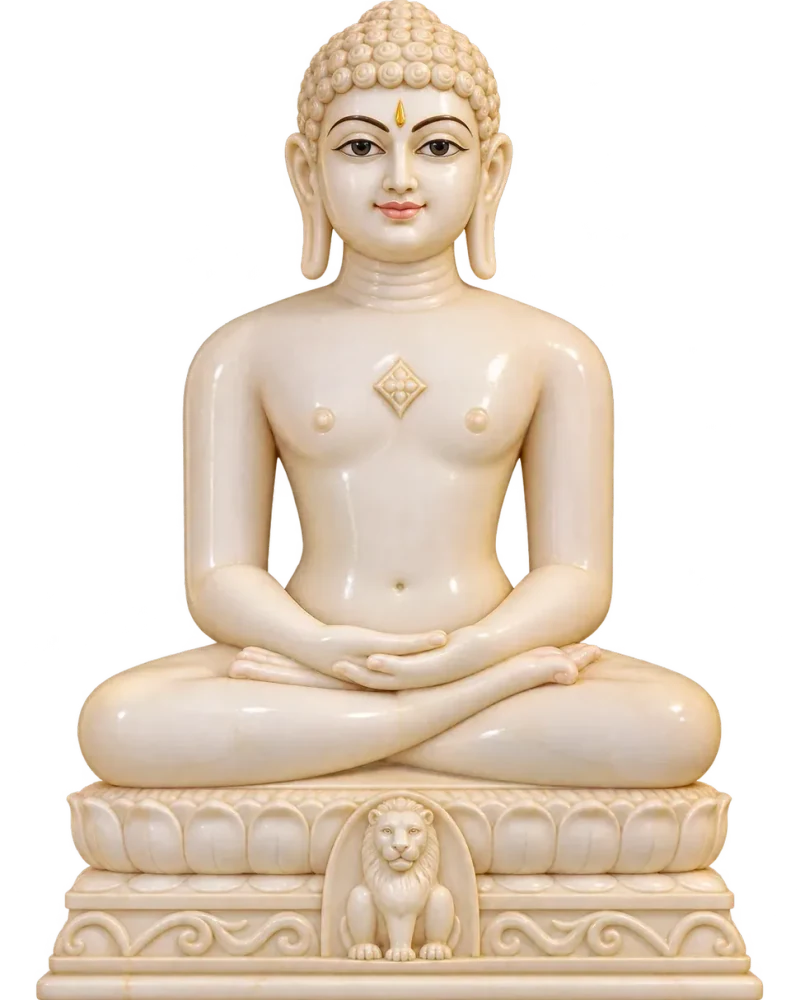
जियो और जीने दोLive, and allow others to live.
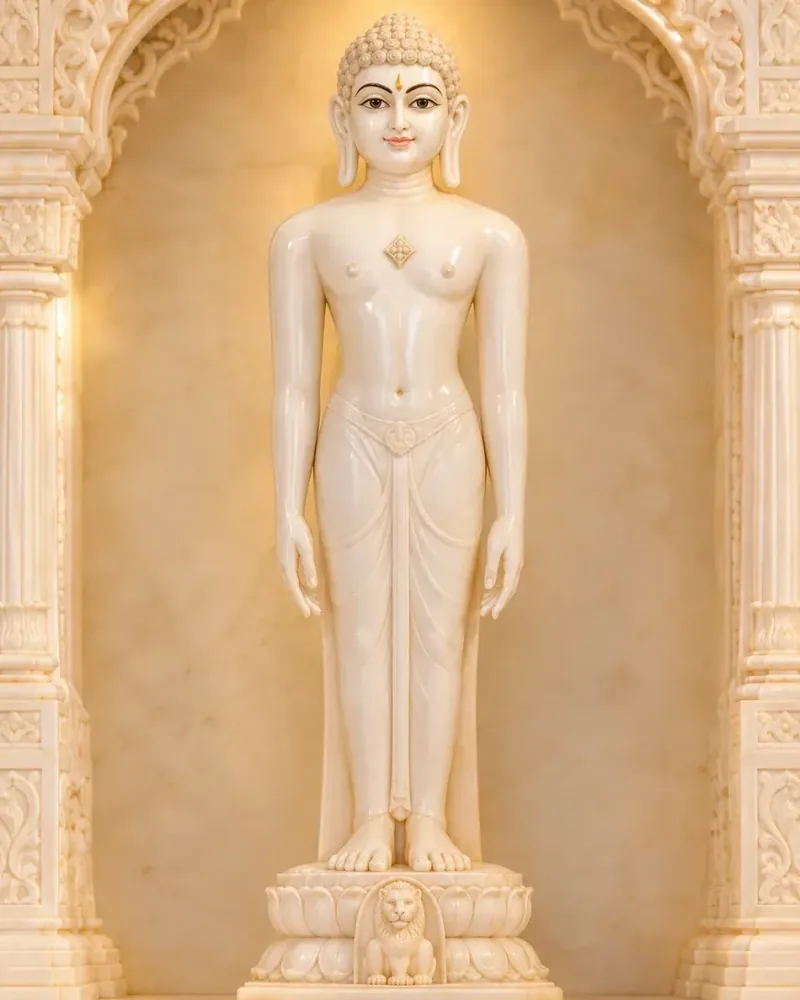
Born a prince in Kundagrama, Vardhamana renounced his kingdom at thirty, attained kevala jnana after twelve and a half years of practice, and taught for thirty years. Jains revere him as the twenty-fourth Tirthankara of our age.
Monks and nuns take them in full as the mahavratas. Lay followers keep gentler forms, the anuvratas, suited to life in the world.
Non-violence
Not to harm any living being in thought, word or deed, nor to cause or approve harm done by others.
In daily lifeSpeak without cruelty online, eat with awareness, and disagree without humiliating anyone.
Truthfulness
To speak only what is true, and to speak it in a way that is beneficial and free of harshness.
In daily lifeHonesty that is also kind: no half-truths at work, no rumours passed on as fact.
Non-stealing
Not to take anything that is not freely given, whether goods, credit, time or ideas.
In daily lifePay fairly, credit other people’s work, and respect their time as you would their property.
Self-control
Complete celibacy for monks and nuns; faithfulness and restraint of the senses for householders.
In daily lifeBe the one who decides, not your impulses, whether the pull is a screen, a craving or a habit.
Non-possessiveness
Limiting what one owns and, more deeply, releasing the attachment that makes us cling.
In daily lifeBuy less, share more, and notice when wanting has quietly turned into needing.
Six choices that carry an ancient discipline into a busy present. Select any line to see the teaching behind it.
Anger is the first of the four passions Jain texts name as the roots of bondage. Restraint is not suppression: it is the pause in which you can see clearly before you act.Rooted in: Kshama (forbearance)
Aparigraha asks us to set our own limits before the world sets them for us. What we do not need, someone else may.Rooted in: Aparigraha
Mahavir kept long periods of silence during his years of practice. A few quiet minutes a day lets the mind settle enough to notice itself.Rooted in: Mauna (silence)
Anekantavada reminds us that the other side is usually holding a real part of the elephant. Listen for it before you argue.Rooted in: Anekantavada
Every purchase and every meal touches other lives. Ahimsa turns everyday choices into acts of care.Rooted in: Ahimsa
Every soul has the same potential and walks its own path. The only meaningful comparison is with who you were yesterday.Rooted in: Samata (equanimity)
One thought for the day. Read it slowly, then take a minute with it.
“Fight with yourself; why fight with external foes? He who conquers himself through himself will obtain happiness.”
Uttaradhyayana Sutra, ch. 9, tr. H. Jacobi
Notice the next time irritation rises. The real contest is not with the person in front of you but with the reaction inside you.
Three sayings to begin with, each labelled by source.
“All breathing, existing, living, sentient creatures should not be slain, nor treated with violence, nor abused, nor tormented, nor driven away.”
Scripture
Acharanga Sutra 1.4.1, tr. Hermann Jacobi
“O Gautama, do not be careless even for a moment.”समयं गोयम मा पमायए
Scripture
Uttaradhyayana Sutra, ch. 10
“I forgive all living beings; may all living beings forgive me. I have friendship with all, enmity with none.”खामेमि सव्वे जीवा, सव्वे जीवा खमंतु मे। मित्ती मे सव्व भूएसु, वेरं मज्झ न केणई॥
Tradition
Jain prayer of forgiveness, recited at Samvatsari
Each festival turns a teaching into a shared practice.
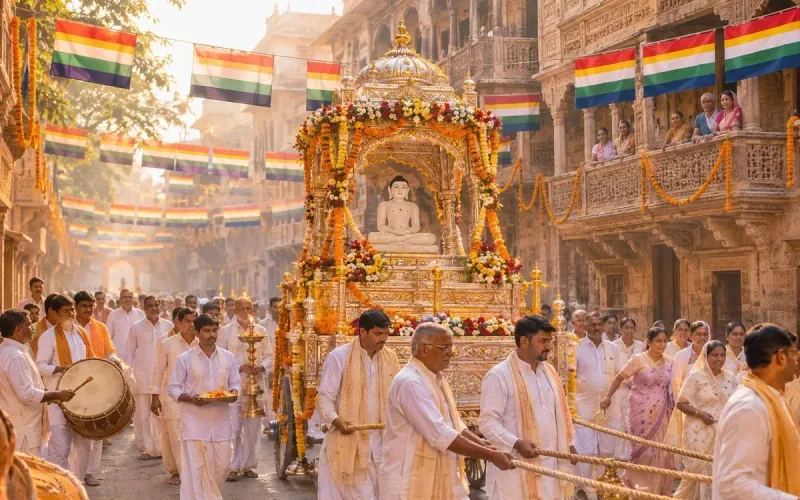
The birth anniversary of Bhagwan Mahavir, celebrated with processions, temple worship and acts of charity.

The most important period of the Jain year: days of fasting, study and inner cleansing.
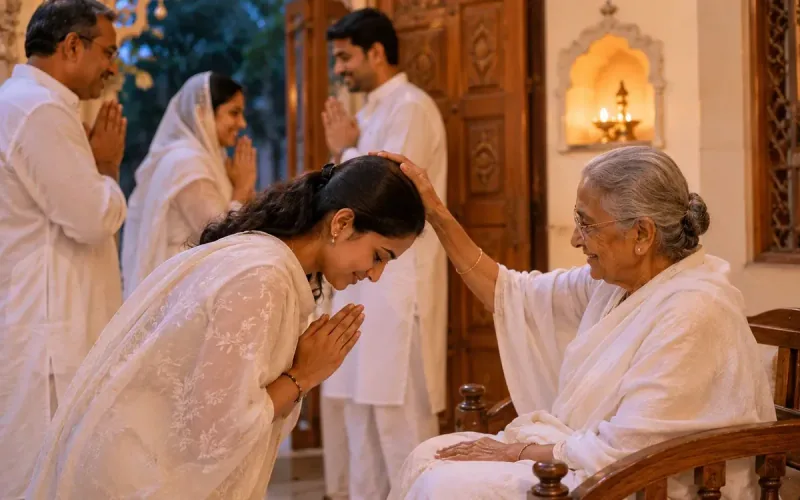
The day of forgiveness, when Jains ask pardon of every being with “Micchami Dukkadam”.
Mahavir did not ask anyone to follow him blindly. He asked them to look inward, as he had. Take one quiet minute now: breathe slowly, and let one thought from this page settle.